>>298612 Leave us, Koislop. Your presence is tainting the atmosphere. Your sister and I are about to have hours of impassioned, hand-holding lovemaking. No, you may not watch. You may not listen through the door. Begone.
>>298630 Bathtubs are a communist mind control tool, 10 times as effective as Tel-Aviv Zion. You ever wondered why did commies only install bathtubs and not showers? Showers are too free spirited.
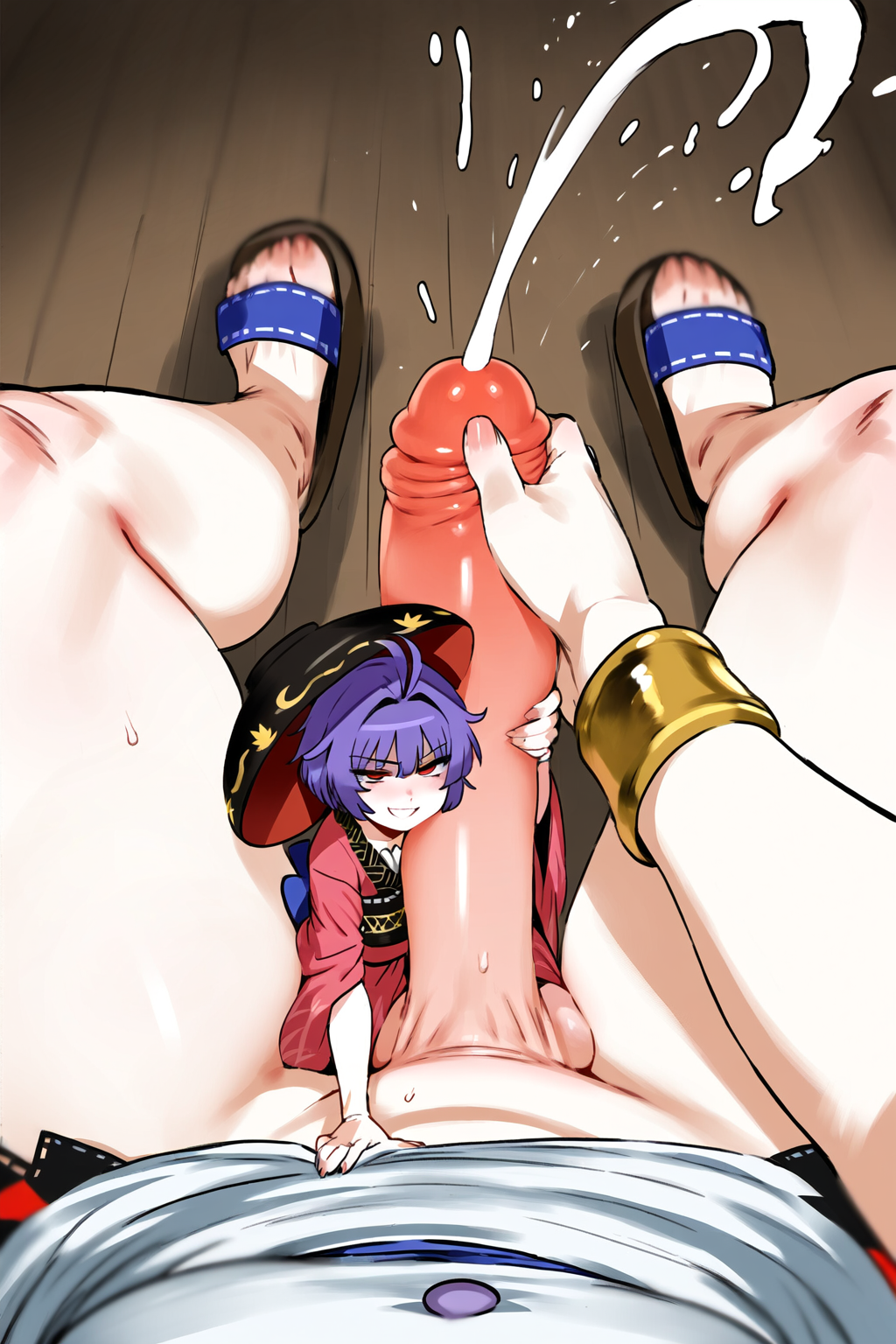
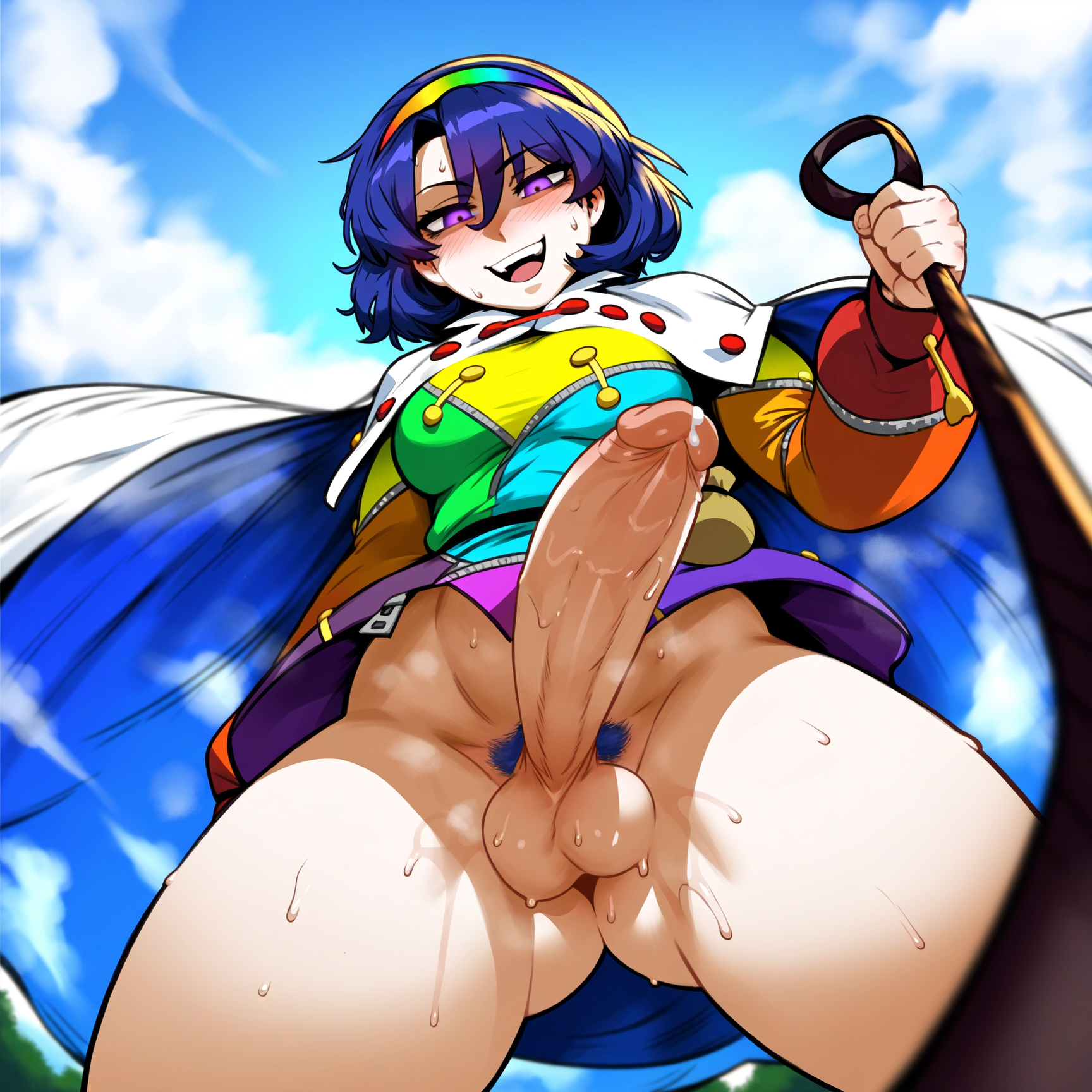
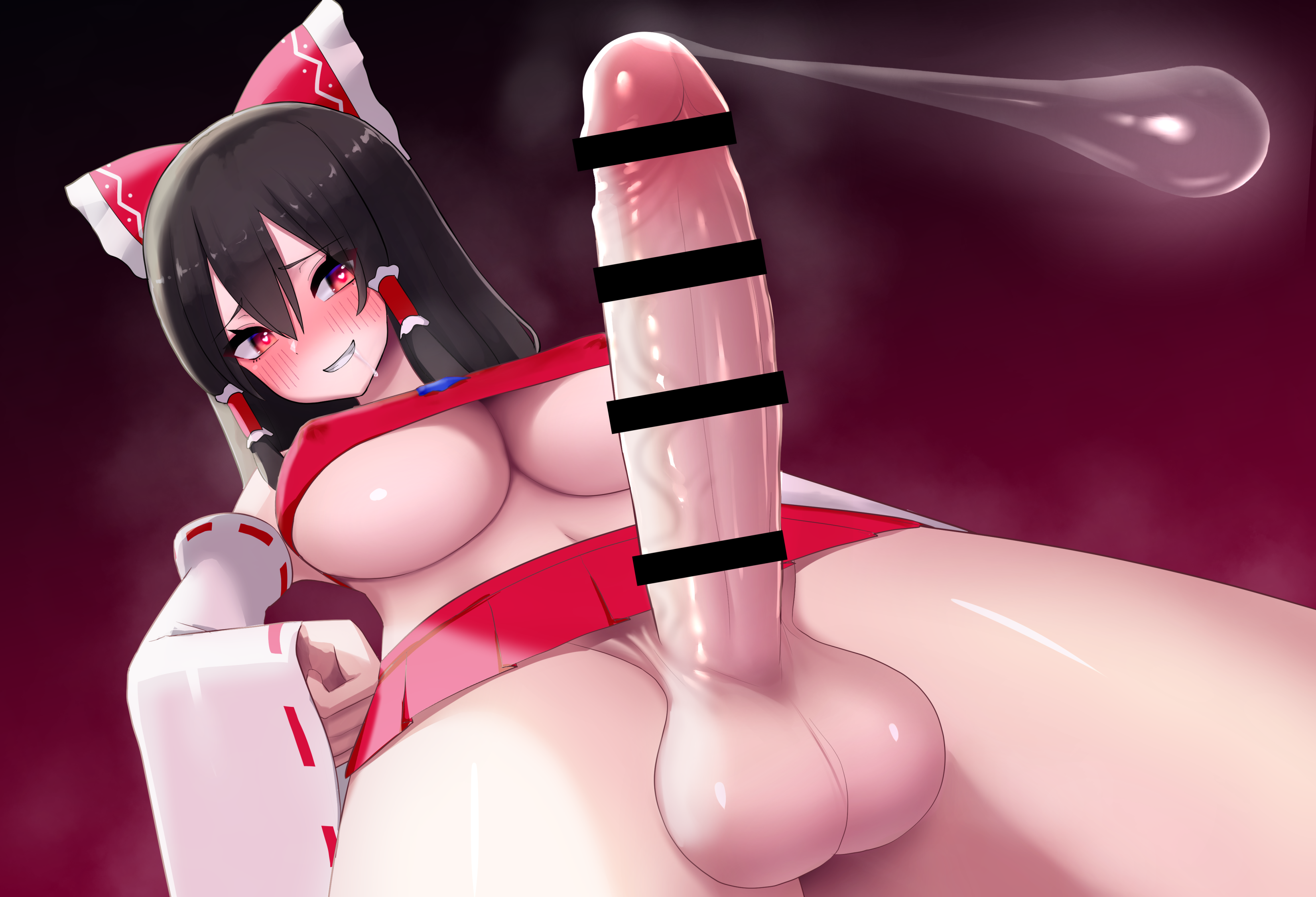
>>298630 this picture is unrealistic, there's no way a futa could produce that much cum given they have feminine bodies which indicates more estrogen than testosterone in their bodies
>>298646 >Male Ruka accurately being depicted as a stud Kino, I get slightly annoyed when they give him a tiny pecker even though that's not lore correct.
>>298687 I read a freud book and now I have a theory that futafags want to suck futa dick due to a lack of nurture from their mother's side. Its absurd to be attracted to a dick on a female and what color liquid does a dick produce? white, what does a breast produce? white milk. futafags compensate for the emotional coldness of their mothers by imagining themselves sucking female dick which is a symbolism for a mother's breast and nurture. Im going to present my theory in the society of psychologists soon , soon futafagism will enter the DSM as a disorder
>>298688 Attraction to futanari might symbolize a compromise between heterosexual and homosexual impulses. The futanari figure embodies both genders simultaneously, allowing the attracted man (assuming a heterosexual identification) to gratify latent same-sex desires without fully acknowledging them. The female aspects provide a "heterosexual" facade, while the male genitalia tap into unconscious homosexual wishes. Freud would see this as a way for the ego to navigate repression: the dual nature resolves ambivalence, fulfilling the id's drive for wholeness in a single object. This echoes his idea that perversions (non-normative attractions) are not aberrations but fixations on pre-genital bisexuality. Futanari attraction could represent a defense against castration anxiety. Freud described this fear as central to male psychosexual development—the dread of losing the phallus. A futanari character, possessing both "complete" female form and an "uncastrated" male organ, might unconsciously reassure the attracted man: it symbolizes an idealized, non-threatened state where femininity doesn't imply loss of phallic power. This could stem from an unresolved Oedipal phase, where the individual projects his own fears onto the futanari as a "perfect" hybrid, allowing vicarious mastery over the anxiety. In Analysis of a Phobia in a Five-Year-Old Boy (Little Hans case, 1909), Freud explores similar symbolic displacements, where phallic symbols resolve deeper fears. The futanari's male genitalia could act as a fetishistic element: it "completes" the female body in the unconscious mind, denying the perceived threat of female anatomy (which Freud problematically linked to castration). For a man, this attraction might gratify narcissistic needs by identifying with the futanari's phallic potency, while the feminine traits allow passive, receptive desires to emerge safely. This blends active (phallic) and passive (anal or oral) libidinal aims, which Freud saw as universal but often repressed in men. The appeal lies in the overdetermination—the figure overfulfills desires, symbolizing both possession and submission without conflict. Attraction to futanari might be narcissistic: the hybrid form mirrors an internalized ideal of completeness, harking back to the pre-Oedipal phase where the child perceives itself as whole and bisexual. Freud argued that homosexual or ambivalent attractions often stem from loving "what one is" or "what one wishes to be." A man drawn to futanari could be projecting his own repressed feminine side (anima, in Jungian terms, but Freudian in origin) onto this figure, achieving self-gratification through identification. The unconscious fantasy here is reunion with a lost wholeness, evading the splits imposed by genital organization.
Immersing in Gensokyo—a matriarchal, conflict-free realm—allows sublimation of aggressive or sexual drives into play, resolving tensions without real-world consequences. Men might project unconscious feminine aspects (anima, in Jungian terms, but Freud saw similar in bisexuality) onto characters, identifying with their power to bypass masculine rivalry. The all-female cast avoids the "male gaze" pitfalls, enabling narcissistic projection: the player "becomes" the girl navigating chaos, symbolizing mastery over castration fears (bullets as phallic threats). In anime/game fandoms like Touhou, "waifus" fulfill narcissistic needs by providing idealized, non-threatening partners. Freud might see this as an anaclitic (attachment-based) choice regressing to narcissism: loving a character like oneself (or desired self) avoids Oedipal betrayal. For some, it's fetishistic—characters' designs (frilly dresses, androgyny) evoke cross-dressing arousal without action. AGP-inclined men might be drawn to Touhou's female world because it permits unconscious transvestic fantasies—imagining oneself as a "2hu" (Touhou girl) resolves repression by embodying the forbidden feminine. This inverts the Oedipus: instead of competing for the mother, one becomes her, directing libido inward. The gameplay's trance-like focus mirrors Freud's "dream-work," displacing body discomfort onto fantasy. Characters like the canonically transgender Toyosatomimi no Miko amplify this, symbolizing successful "castration" transcendence into empowered femininity.
>>298696 Lol, fair enough—Gensokyo isn't actually conflict-free; it's literally a constant barrage of spell card duels, border incidents, and youkai causing problems left and right. I was speaking more psychologically: for a lot of fans (especially the ones deep in the waifu/yuri side of the fandom), Gensokyo functions as an escapist fantasy realm where there are no men, no traditional heterosexual romance plots, no male gaze objectification, and no real-world gender politics intruding. It's a space where power dynamics are between cute girls, conflicts are ritualized and non-lethal, and everything stays aesthetically 'pure' and self-contained. So yeah, it's far from peaceful in canon (Reimu's basically a full-time exterminator), but the vibe the fandom often chases is this idealized, male-excluding matriarchal bubble. That's what I meant by 'conflict-free realm'—not literal, but the emotional/psychological projection a subset of (mostly male) fans put onto it. No hallucination, just shorthand for the escapism angle that ties into the deeper Freudian stuff we were talking about.
>>298699 From a strictly Freudian psychoanalytic perspective, attraction to otokonoko (男の娘)—young males who present in a highly feminine manner, often through cross-dressing and androgynous aesthetics, while retaining male anatomy—can be understood as a manifestation of the universal psychic bisexuality that Freud posited as inherent to all human beings. Freud maintained that every individual possesses an original bisexual disposition, both in anatomical and psychical terms, from which heterosexual and homosexual object choices develop through the vicissitudes of libidinal development. In the Three Essays on the Theory of Sexuality (1905) and later works, he argued that the resolution of the Oedipus complex directs the majority toward heterosexual genital organization, but latent bisexual tendencies persist in the unconscious, capable of surfacing in fantasies, dreams, or object choices without necessarily indicating fixation or inversion. The otokonoko figure embodies a compromise formation: the object appears as an idealized feminine form (evoking the anaclitic or narcissistic love for the mother in early development), yet retains the phallus, thereby disavowing castration anxiety—the fundamental threat perceived in the female genital during the phallic phase. This allows the libido to attach to a "phallic woman," preserving the illusion of completeness while permitting gratification. In Freud's analysis of fetishism (1927), similar mechanisms operate: the fetish (here, the feminine presentation superimposed on maleness) serves as a defensive substitute that acknowledges yet denies the perceived lack, enabling sexual satisfaction without full confrontation of Oedipal prohibitions.
>>298712 In quantum mechanics, particles like electrons can exist in a superposition of states until observed, collapsing into a definite state (as per the Copenhagen interpretation). An otokonoko could be analogized to a quantum state vector in Hilbert space, where the "male" and "feminine" attributes are entangled basis states: 1. Let |M⟩ represent the male biological state, and |F⟩ the feminine expressive state. 2. The otokonoko "wavefunction" might be ψ = α|M⟩ + β|F⟩, where |α|² + |β|² = 1, and α, β are complex amplitudes reflecting the probability of perceiving one trait over the other. 3. Upon "observation" (e.g., societal scrutiny or self-identification), the wavefunction collapses, but in the otokonoko case, the entanglement persists, leading to ambiguity akin to Schrödinger's cat being both alive and dead. From the perspective of particle physics and the Standard Model, symmetries underpin fundamental interactions. Otokonoko can be seen as a manifestation of broken symmetry, similar to the Higgs mechanism where the electroweak symmetry breaks to give particles mass. Consider gender expression as a gauge symmetry group, say U(1) for simplicity, where transformations rotate between "male" and "female" phases without changing the Lagrangian (the system's "rules"). -> In an otokonoko, spontaneous symmetry breaking occurs: the vacuum expectation value shifts, "acquiring" feminine traits while retaining male invariants (like chirality in fermions). -> This mirrors how quarks and leptons gain mass via the Higgs field, but here it's a cultural "field" breaking the symmetry, resulting in a Goldstone boson-like mode—perhaps the "charm" or fluidity that emerges. In grand unified theories (GUTs), higher symmetries unify forces at high energies; analogously, at a "fundamental" level, gender might unify, only differentiating at lower "energies" (societal scales). An otokonoko might represent a brane-world scenario where gender traits are projections from higher-dimensional space. - The "male" core is like the bulk spacetime, while feminine expressions are excitations on a 3-brane embedded in Calabi-Yau manifolds. - Duality (e.g., T-duality) allows equivalence between seemingly opposite configurations: a compact dimension's radius R and 1/R yield identical physics, much like how an otokonoko's presentation flips perceptions without altering the underlying "string" (identity). - In black hole thermodynamics or AdS/CFT correspondence, horizons hide information; similarly, societal "event horizons" obscure the full multidimensional nature, leading to holographic illusions of binary gender. Thermodynamically, otokonoko embodies increased entropy in social systems. In statistical mechanics, entropy S = k ln W (Boltzmann's formula) measures microstate diversity for a given macrostate. - Binary gender norms represent low-entropy ordered states (crystalline lattice), while otokonoko introduces disorder, maximizing configurations like in an ideal gas. - Phase transitions (e.g., from rigid to fluid gender expression) mimic critical points in Ising models, where external fields (cultural pressures) flip spins, leading to emergent phenomena.
>>298692 Geg But i unironically think that GPT has a point, tho i view futanari more from a standpoint of the alchemical marriage that makes a human being complete